Forbes & Burton Chronicles

Insights, Trends, and More - Your Premier Blog for Business, Finance, and Lifestyle

Property Styling vs Interior Design: Which Do You Actually Need?

You have a property to sell, a home to transform, or both, and two service providers are quoting you for what sounds like the same thing. Hiring the wrong one does not just waste money; it can cost you thousands off a final sale price or leave you with a beautifully staged home that does not reflect how anyone actually lives in it.

The difference between property styling and interior design is not a matter of degree; it is a matter of objective. 

Understanding that distinction takes five minutes and can save you a significant amount of money.

What Is Property Styling?

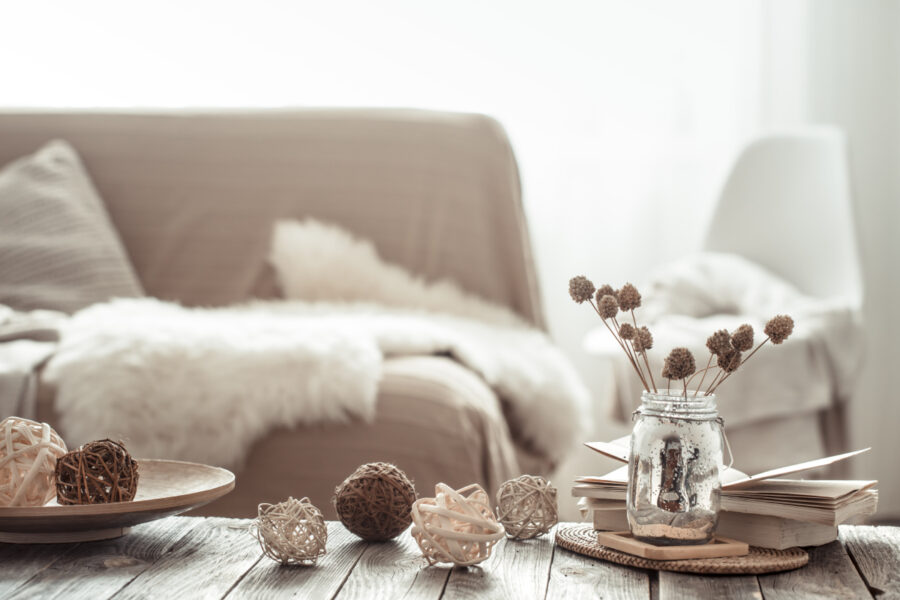
Property styling is the process of preparing a home for sale by presenting it at its highest visual potential to the widest possible buyer pool. It is also called home staging or presale styling, and in Australia, property styling is the dominant industry term.

A property stylist brings in furniture, rugs, artwork, mirrors, lamps, and accessories on a hire basis. The items stay in the property for the duration of the sales campaign, typically six to eight weeks, then get collected after settlement. The homeowner owns none of it.

Every decision a property stylist makes is driven by one question: what will make the most buyers emotionally connect with this space during a 20-minute open home inspection? That is a fundamentally different question from what is beautiful, what is functional, or what reflects the seller’s taste.
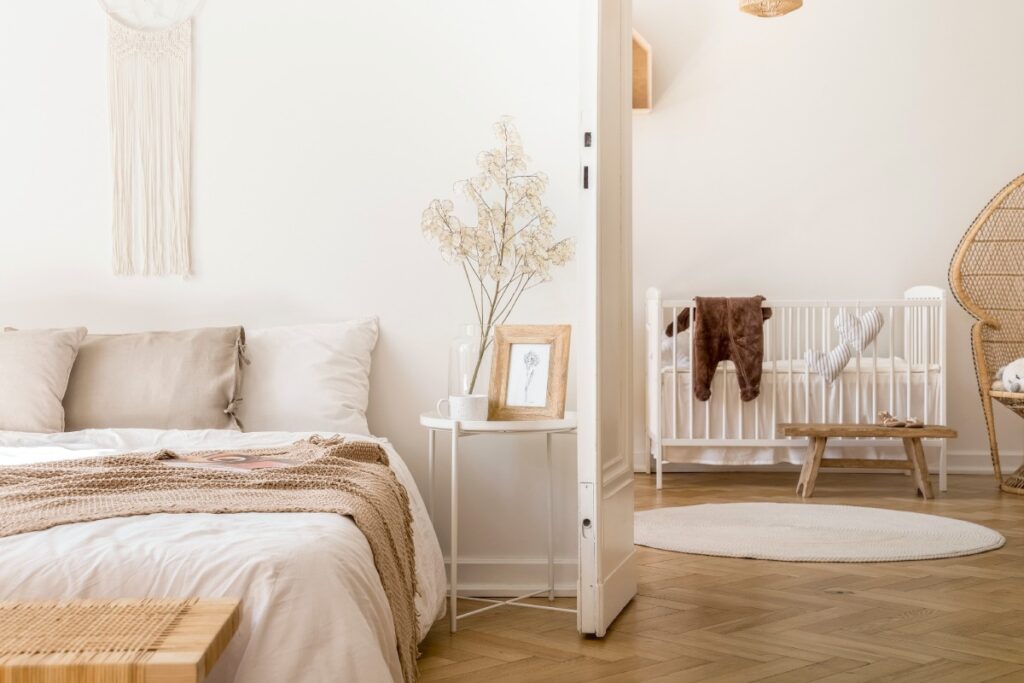
home staging Australia property styling

The Psychology Behind Property Styling

Property stylists are not decorators. Their core tool is aspirational projection: they create a visual environment that allows a buyer to mentally insert themselves into the property rather than seeing the seller’s life.

Neutral palettes, scaled furniture that makes rooms read as larger than they are in a wide-angle lens, and deliberate negative space all serve that goal. Styling choices are based on market psychology rather than long-term functionality: a small spare room might be presented as a home office rather than a fourth bedroom, specifically to broaden the appeal to a different buyer demographic.

This is not an aesthetic preference. It is buyer segmentation with furniture.

What Property Styling Costs in Australia

For a standard three-bedroom home, professional property styling in Australia typically costs between $2,000 and $8,000 for a six-week campaign, depending on the city, the size of the property, and how much furniture needs to be hired versus sourced from what is already there. Prestige properties in Sydney or Melbourne can push above $15,000.

According to REA Group research, styled homes sell 7.5% higher on average. On a $1.2 million property in Brisbane or Perth, that translates to $90,000 in additional sale proceeds against a $4,000 outlay. Few investments in the selling process produce that ratio.

What Is Interior Design?

Interior design is a comprehensive professional service that shapes how a space functions, feels, and responds to the people who live in it permanently. It begins with understanding the client, not the market.

A qualified interior designer addresses spatial layout, material and finish selection, lighting design, custom joinery, built-in furniture specifications, and often project management through to installation. This work can begin at the architectural drawings stage, long before a single piece of furniture exists.

For sellers with no prior experience hiring creative professionals, understanding the basics of interior design as a discipline makes it significantly easier to brief a designer, evaluate a quote, and hold a contractor accountable to scope.

interior design consultation Australia

Qualifications and Regulation

In Australia, interior designers often hold formal tertiary qualifications from accredited programs at institutions including RMIT, Griffith University, and UTS. Many are members of the Design Institute of Australia (DIA), which sets professional standards and ongoing education requirements.

Property stylists face no equivalent regulatory framework. There are no qualifications required to become a property stylist, though many hold formal certificates or diplomas, and those qualifications serve as a meaningful signal of expertise in a competitive industry. 

This does not make property styling a lesser skill. It makes it a different category of service, with different professional structures and accountability mechanisms.

What Interior Design Costs in Australia

Interior designers typically charge between $150 and $300 per hour or structured project fees. A full residential design engagement for a medium-sized home sits between $15,000 and $50,000+, scaling with scope. Large developments and premium builds can extend into six figures over a multi-year project timeline.

The client owns every outcome: the furniture, the finishes, the custom pieces. Nothing leaves when the project closes.

Side-by-Side: The Real Differences

FactorProperty StylingInterior Design
Primary objectiveMaximise sale priceOptimise how the occupant lives
Who it servesFuture buyers (strangers)The current client/homeowner
DurationTemporary (6-10 weeks)Permanent
Furniture ownershipHired, returned after salePurchased, owned by client
Decision driverBuyer psychology and market dataClient lifestyle, personality, function
Qualifications requiredNone regulatedTertiary (DIA accreditation common)
Typical cost (3-bed AU)$2,000 to $8,000$15,000 to $50,000+
ROI metricSale price upliftQuality of life + long-term asset value
Structural changesNone (surfaces and furnishings only)Yes (layout, joinery, lighting, materials)

Where People Get Confused

The overlap that creates confusion: both disciplines work with furniture, colour, and spatial composition. Both can produce a beautiful room. That surface similarity is where the comparison ends.

Interior designers may style spaces, but stylists are not likely to design them. An interior designer understands structural constraints, building codes, and how a room needs to perform across a decade. A property stylist understands what photographs well, what reads as spacious at 10 am on a Saturday, and what makes a buyer in the 35-to-55 demographic feel something they want to act on.

Asking a property stylist to design your forever home is the wrong brief. Asking an interior designer to maximise your open home result is also the wrong brief. The objectives are structurally opposed.

When You Might Need Both

There is a legitimate scenario where both services apply, sequentially.

Imagine a seller in inner-west Sydney with a 1970s home going to auction. The kitchen and bathrooms are dated but structurally sound. An interior designer is engaged for a rapid pre-sale renovation: reconfigure the kitchen layout, specify new benchtops and tapware, select paint colours that read well in Sydney’s north-facing light, and update the lighting plan. The designer’s scope closes at installation.

A property stylist then takes over. They bring in hired furniture scaled to the freshly renovated rooms, stage the outdoor entertaining space, and dress every surface for the photoshoot and campaign. The designer solved the permanent problems. The stylist solved the perception problem.
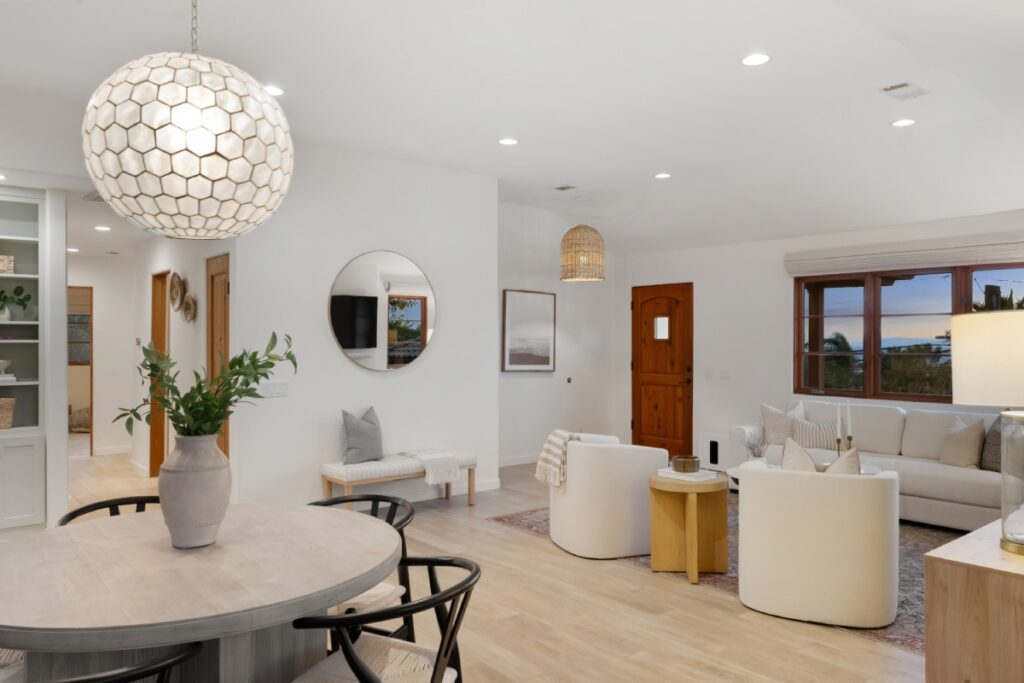
property styling after renovation Australia

This two-stage approach is more common in competitive metro markets, particularly in Sydney and Melbourne, where buyer expectations have been shaped by high-quality marketing campaigns across comparable properties.

Which One Do You Actually Need?

You need a property stylist if 

You are selling within the next three to twelve months, and your property is structurally sound. Your priority is maximising the sale price and reducing days on market. You do not want to permanently own the furniture used. When searching for the right professional, look for a Creative Property Stylist with a verifiable portfolio and references from recent campaigns in your suburb’s price bracket. Local market knowledge matters as much as design ability.

You need an interior designer if

You have bought or are renovating a property you intend to live in. You need help with layout, materials, lighting, or custom elements. You want a result that reflects how you actually use your home over time, not how a buyer would perceive it in a 20-minute window.

You need both if

Your property requires structural or cosmetic improvements before it can be effectively staged, and you plan to sell within 12 months. Use the designer to fix the permanent issues. Use the stylist to amplify the result.

Three Things to Know Before You Book Anyone

  • Property styling is a temporary, hire-based service with a measurable ROI tied to sale price. In the Australian market, the return on investment consistently outperforms the outlay for competently priced campaigns.
  • Interior design is a permanent, personalised service with no regulated minimum qualification requirement in Australia, making credentialing and portfolio review non-negotiable before engagement.
  • The two services solve different problems and in some pre-sale renovation scenarios, function best when used in sequence rather than as alternatives.

Discussion question: If you have sold a property with and without professional styling, what difference did you notice in buyer behaviour at the open home, and did the final sale price reflect that?
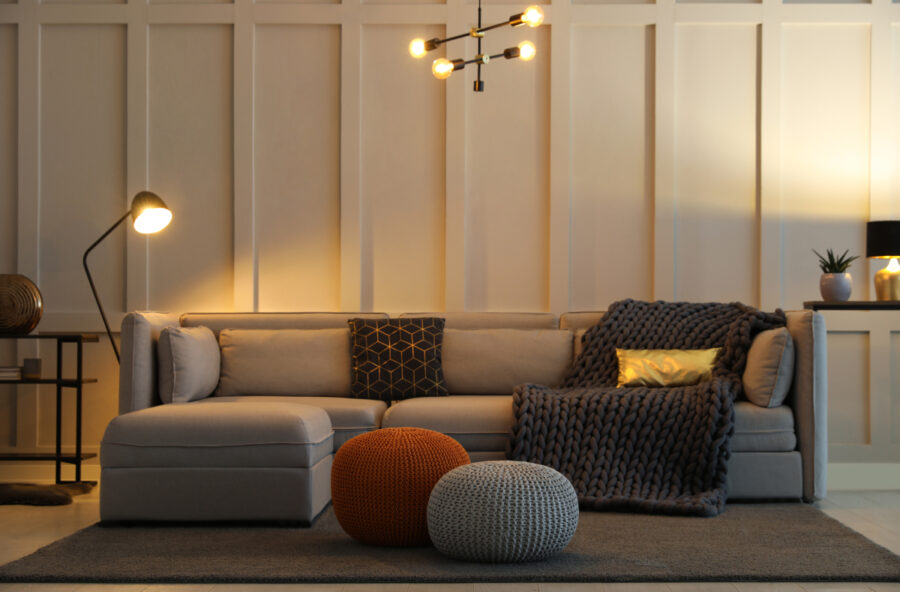
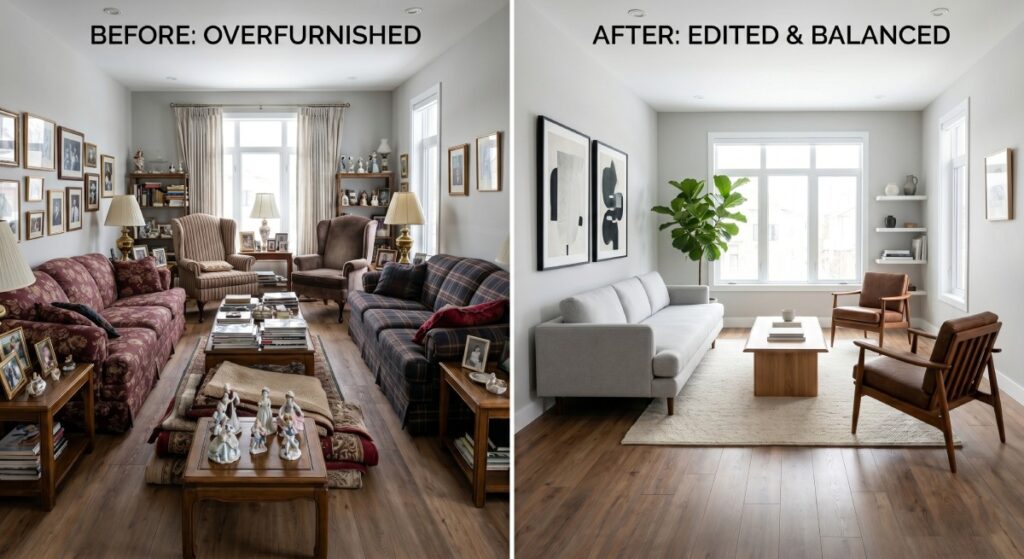
Interior design basics shown through a styled Australian living space

7 Basics of Interior Design Every Homeowner Needs to Understand

Most rooms fail for the same reason: decisions get made in isolation. 

A sofa gets chosen because it looks good in the store. Paint colour gets picked off a swatch. Furniture gets arranged around the TV. The result is a room full of individually fine choices that collectively produce nothing.

These 7 basics of interior design are the framework that stops that from happening.

Why Interior Design Has Rules

Design principles exist because the human eye and brain respond to visual environments in predictable ways. A 2021 report from the American Society of Interior Designers (ASID) found that 68% of respondents said their home environment directly affects their mental well-being. That is not a soft finding. It means the structure of a room has measurable consequences.

Professionals apply these fundamentals not as rigid constraints, but as a diagnostic tool. When a room feels off but you cannot identify why, one of these seven principles is the answer.

1. Space: The Foundation Everything Else Sits On

Space is not empty. In interior design, space is an active material.

Positive space refers to the area occupied by objects: furniture, art, plants, and fixtures. Negative space is the open, unoccupied area around them. The relationship between the two determines whether a room breathes or suffocates.

Most homeowners overfurnish because they misread negative space as wasted space. It is not. A room with too little negative space reads as chaotic, regardless of how good the individual pieces are.

The rule to apply:
Walk into your room and remove one piece of furniture mentally. If the room feels better, it stays out.

2. Line: The Direction Your Eye Travels

Every element in a room creates a visual line. Lines direct attention and create psychological responses.

Line TypeDirectionPsychological EffectCommon Application
HorizontalAcrossCalm, stability, restfulLow furniture, skirting boards, shelving
VerticalUpHeight, formality, strengthTall curtains, floor-to-ceiling joinery
DiagonalAngularEnergy, movement, tensionStaircases, angled furniture arrangements
CurvedOrganicSoftness, comfort, flowRounded sofas, arched doorways, rugs

A room dominated by a single line type becomes monotonous. A room with competing line types becomes chaotic. The skill is in weighting: choose a dominant line, then let the others play supporting roles.

Real-world example:
A home office with vertical shelving, a horizontal desk surface, and one curved task chair. The verticals signal focus and authority. The horizontal grounds the workspace. The curved chair prevents rigidity. That is deliberate line composition.

3. Form: The Three-Dimensional Shape of Objects

Form is what happens when a line closes on itself and becomes three-dimensional.

Forms are either geometric (cubes, cylinders, rectangles: man-made, structured) or natural (irregular, organic: plants, driftwood, stone). A room composed entirely of geometric forms feels clinical. A room composed entirely of natural forms can feel unresolved.

The practical application: every room needs both. A sharp-edged marble dining table works because a linen chair with organic grain, or a rounded pendant light above it, pulls it back from sterility.

Check your room for form variety before you buy anything new. If everything is boxy and angular, the next purchase should have a curve or an organic form built in.

4. Light: The Variable That Overrides Everything Else

Get the light wrong, and the other six principles cannot save the room.

Light has two categories. Natural light changes throughout the day and is governed by window orientation.

In Australia, north-facing rooms receive consistent natural light year-round. South-facing rooms get cool, diffused light. This should determine your colour palette before you open a paint chart. 

In north-facing Australian rooms, controlling the volume and direction of incoming light often comes down to the window treatment chosen, and plantation shutters offer a level of light adjustment that standard blinds cannot replicate.

Artificial light requires three layers to function correctly:

  • Ambient: The base level of light for general use (overhead fixtures, recessed lighting)
  • Task: Directed light for specific functions (reading lamps, under-cabinet kitchen lighting)
  • Accent: Decorative light that creates depth and highlights features (picture lights, strip lighting behind joinery)

A room with only ambient lighting, which describes most Australian homes, is a flat room. It has no shadow, no depth, and no atmosphere, regardless of how well everything else is executed.

5. Colour: The Most Emotionally Loaded Decision You Will Make

Colour does three things simultaneously: it sets emotional tone, alters perceived spatial dimensions, and creates visual relationships between every object in the room.

The 60-30-10 rule is the professional standard for colour distribution:

  • 60% dominant colour (walls, large upholstery)
  • 30% secondary colour (curtains, secondary furniture, rugs)
  • 10% accent colour (cushions, art, accessories)

This ratio works because it mirrors the way the eye naturally wants to rest, then travel, then be surprised.

Colour temperature is where most people get caught out. Warm colours (reds, oranges, yellows) advance visually, making walls feel closer. Cool colours (blues, greens, greys) recede, making spaces feel larger. This is not a stylistic preference. It is how human visual processing works.

Practical test:
If your room feels smaller than its measurements suggest, check the colour temperature on every surface, including the floor and ceiling.

6. Texture: The Dimension That Photography Cannot Capture

Texture is the element most consistently underused by homeowners and most consistently leveraged by professionals.

Texture operates on two levels: tactile (how a surface actually feels) and visual (how a surface appears to feel from a distance). Both matter because both affect how a room reads.

A monochromatic room without textural variety is flat. The same colour palette deployed across matte walls, a velvet sofa, a linen throw, a concrete side table, and a jute rug produces a room with genuine depth and warmth. The colour is consistent. The surfaces tell different stories.

The test:
Photograph your room in black and white. Remove colour from the equation. If the room looks interesting in greyscale, the texture is working. If it looks flat, it is not.

7. Pattern: The Element That Can Unify or Destroy a Room

Pattern is concentrated colour and line. It amplifies everything it touches, which makes it the most powerful and most dangerous of the seven basics.

Three rules govern pattern use:

Scale variation

Never use patterns of the same scale together. Pair a large-scale pattern (bold geometric rug) with a medium-scale pattern (subtle cushion print) and a small-scale pattern (thin stripe on curtain). Same scale patterns fight each other.

Colour connection

Patterns in the same room must share at least one colour. This is the thread that prevents a room from reading as random.

The 1-in-3 rule 

In any grouping of three decorative objects, one can carry a pattern. The principles of line, form, and texture are applied very differently across major European traditions, and the contrast between Italian and French interior design shows exactly how the same fundamentals can produce opposing visual outcomes. The other two stay solid. More than one in three, and the eye has nowhere to rest.

How the 7 Basics Work as a System

No principle operates independently. Space affects how form reads. Light changes colour perception. Texture and pattern compete for the same visual attention.

When a professional evaluates a room, they do not run through a checklist. They look at the room as a whole and identify which principle is failing and how that failure is cascading into others.

A room that feels dark and heavy is usually a light problem compounded by a colour temperature problem, not a furniture problem. Replacing the sofa does not fix it. Re-evaluating the window treatment and paint sheen does.

That diagnostic thinking is the actual value of understanding these fundamentals.

Key Takeaways:

  • Space, line, form, light, colour, texture, and pattern are not decorating preferences. They are structural principles that determine whether a room functions visually.
  • Most room problems trace back to one or two failing principles, not the entire design. Diagnose before you spend.
  • Light is the variable that overrides all others. Address it first.

Discussion question: If you had to identify which of the seven basics is most consistently misunderstood by homeowners making purchasing decisions, which would it be and why?

AC and DC power

AC vs DC Power: What They Are and The Main Differences

Every time you plug a charger into a wall or start your car, electricity immediately goes to work. Yet most people never stop to consider what kind of electricity is actually flowing through those cables.

A man fixes a burnt socket. Short circuit, burnt wires. traces of smoke and fire on the wall. The electrical outlet was completely burnt and melted, the voltage drop from the use of an electric heater

How Much Does It Cost to Rewire a House in Perth, WA? A Complete Guide

Rewiring a house is one of those essential upgrades that many homeowners put off—until problems start showing. Whether you’ve just bought an older Perth home or you’re renovating, understanding the cost of house rewiring is crucial for budgeting and safety.

multi level ceiling pattern with three dimensional protrusions and a suspended tiled ceiling white color, close up geometric clear details, nobody.

Suspended Ceilings 101: Types, Benefits & Installation

Are you staring up at a cluttered mess of wires, ductwork, and uneven structural beams? Renovating a basement or office often hits a roadblock when you realize just how expensive and messy it is to finish a raw ceiling with traditional drywall.

In an elegant room

Italian vs French Interior Design: The Definitive Style Guide

You are not alone. Many Australian homeowners fall in love with the “European aesthetic” but struggle to distinguish between the two heavyweights of continental style: Italy and France.

Compost the kitchen waste, recycling at home. Compost bin with vegetables cutted leftovers on the kitchen table with blurred woman cooking meal. Environmentally responsible, ecology. Selective focus.

Why Should I Compost at Home? (A Complete Beginner-Friendly Guide)

Home composting is the process of recycling food scraps and garden waste into nutrient-rich compost that improves soil, reduces landfill waste, and supports sustainable living. Composting at home helps you cut household rubbish, save money on fertiliser, and create healthier plants—all with minimal effort.

How Do You Know If You Have Low Libido? What Causes a Low Libido?

Sexual desire—or libido—is a natural and important part of human health. It’s influenced by a mix of physical, emotional, and psychological factors.

What Is a Downlight? Can You Install It Yourself? How Long Does It Last?

What Is a Downlight? Can You Install It Yourself? How Long Does It Last?

Downlights have become one of the most popular lighting choices in Australian homes and businesses today. Whether you’re building a new home, renovating your kitchen, or updating your office lighting, you’ve probably come across downlights in showrooms or design magazines. Their clean, modern look and energy efficiency make them a go-to choice for homeowners seeking both style and practicality.

Kale: The Superfood Powerhouse – Benefits, Nutrition, and How to Enjoy It Safely

Kale has become one of the most popular “superfoods” in recent years, appearing in everything from smoothies and salads to baked chips and soups. This dark leafy green vegetable, once primarily found in farmers’ markets or health food stores, has now become a household name — and for good reason.

Page 1 of 5

2023 Forbs and Burton & All Rights Reserved